
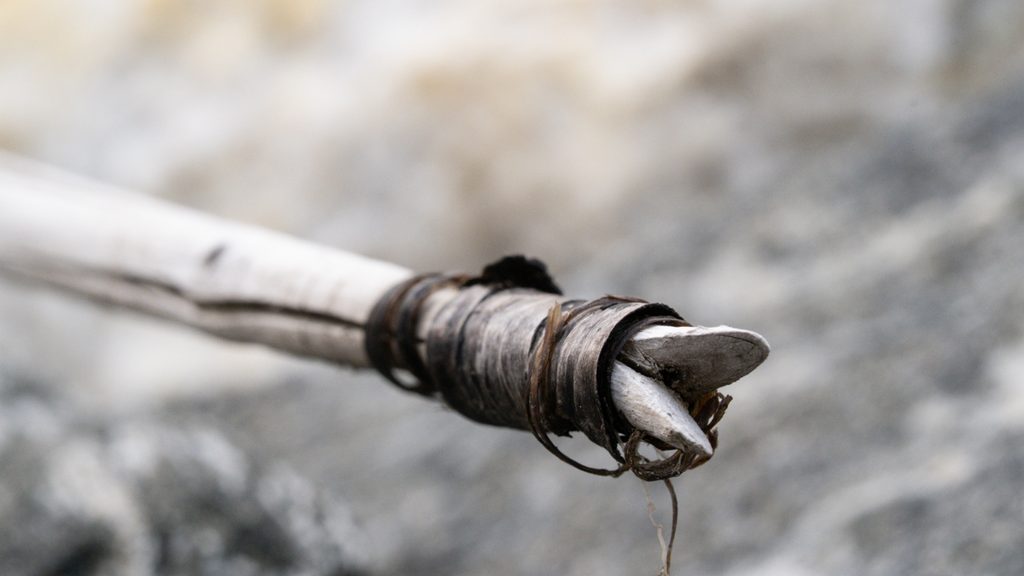
This year, we have discovered and recovered 48 prehistoric arrows from melting mountain ice in Jotunheimen, Norway. But the arrows tell us more than a story about hunting in the past. They reveal a new pattern: the oldest ice is now melting, and with it, some of the oldest archaeological finds are emerging.
For thousands of years, ancient ice has safely preserved unique objects from the past. Now that ice is disappearing.
We have been at the edge of the ice. We have seen it happening. And we are witnesses to a rapidly changing archaeological landscape.
Facts From the Melting Frontier
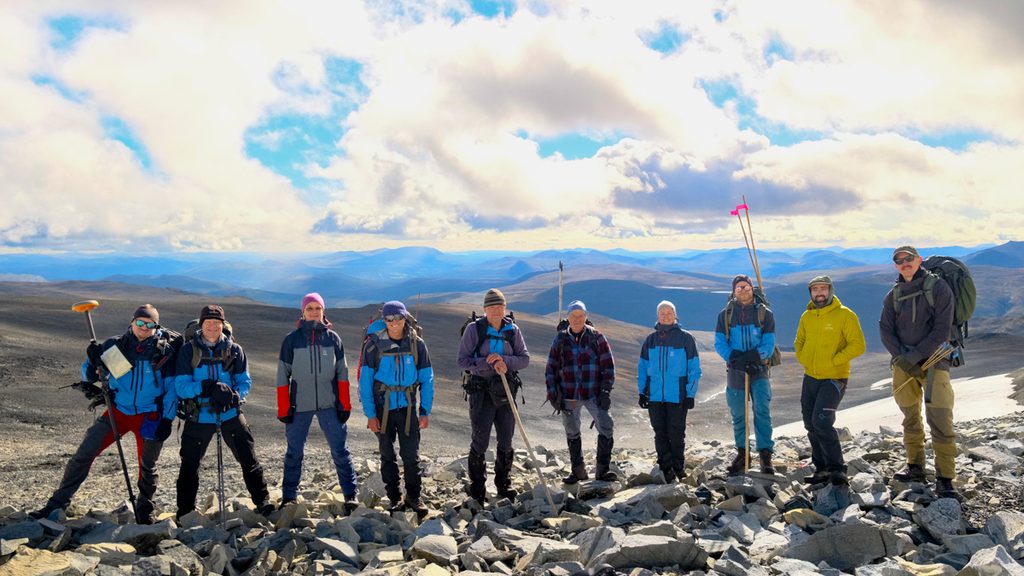
The Glacial Archaeology Programme in Innlandet, Secrets of the Ice, has just returned from three intense weeks at the melting frontier in the high mountains of Jotunheimen.
The ice is disappearing much faster than we expected. The landscape has changed dramatically, and large areas that were recently covered by ice are now ice-free.
20 Years of Glacial Archaeology
This year marks 20 years of glacial archaeology in Innlandet.
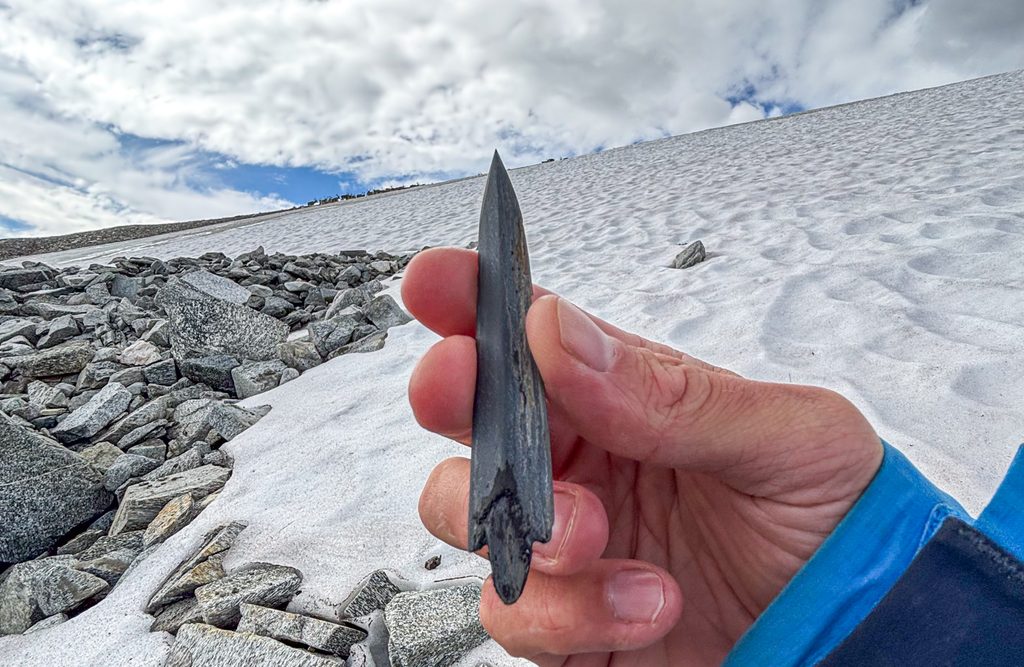
Since our work began in 2006, we have recorded 73 archaeological sites and recovered more than 5,000 artefacts from the ice.The finds include arrows, bows and other hunting equipment – evidence of ancient reindeer hunting – as well as clothing, shoes, packhorses and objects from everyday life. Together, they provide unique evidence of how people lived, travelled and used the high mountains in the past.
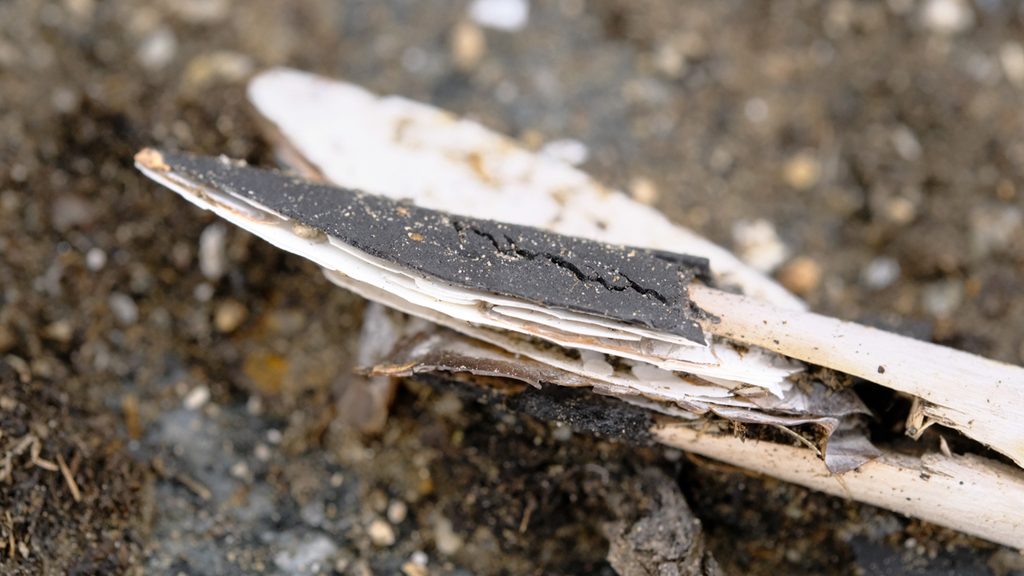
What makes finds from ice patches so special is the preservation of organic materials such as wood, hide, sinew and textiles. These fragile materials would normally decay. Frozen in time in the ice, they give us an exceptionally detailed glimpse into the past.
A New Pattern
When we began our work in 2006, most of the artefacts we recovered were less than 2,000 years old, with particularly large numbers dating to the Viking Age. Finds older than 2,000 years were relatively rare.
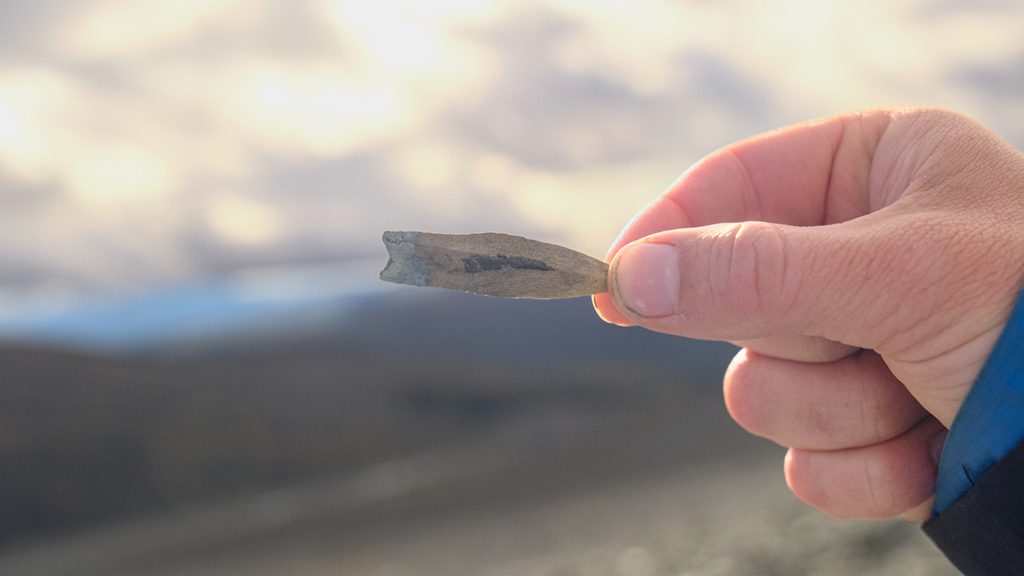
Now the picture has changed dramatically. Increasingly, the artefacts melting out of the ice are more than 2,000 years old. Many date to the Stone Age and Bronze Age. The oldest are more than 6,000 years old.
The Oldest Ice – The Oldest Finds
This year, we have concentrated our work in the Kvitingskjølen mountain area of Jotunheimen, at Langfonne, Storfonne and Handklefonne.
The melting has been extensive. In many places, ice that has survived for thousands of years is now beginning to disappear completely. And this is where we see the connection:The oldest ice contains the oldest finds.
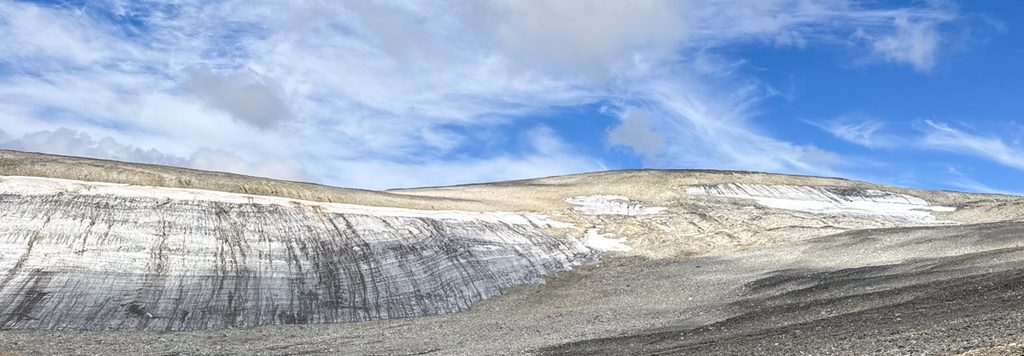
As the oldest ice melts, the oldest archaeological material is emerging.The extensive melting of mountain ice at Kvitingskjølen is not unique. The same process is taking place everywhere – both in the Norwegian mountains and in mountain regions around the world.
The Next 20 Years
We expect to see more of the same in the years ahead. Based on what we have observed over the past two decades, The ice on many of the archaeological ice sites we have been studying may be completely gone within 20 years.
This gives us a limited window of opportunity. Every field season matters, as the objects decay fast once they emerge of the retreating ice.
The Field Season Is Not Over
After three intense weeks at the ice edge, we are taking a short break. There is still much work to do. The finds must be secured, documented and prepared for further research and conservation. We must also plan the next stage of the field season – and recover more archaeological material before winter fully sets in.
Directly From The Ice Edge to The Exhibition
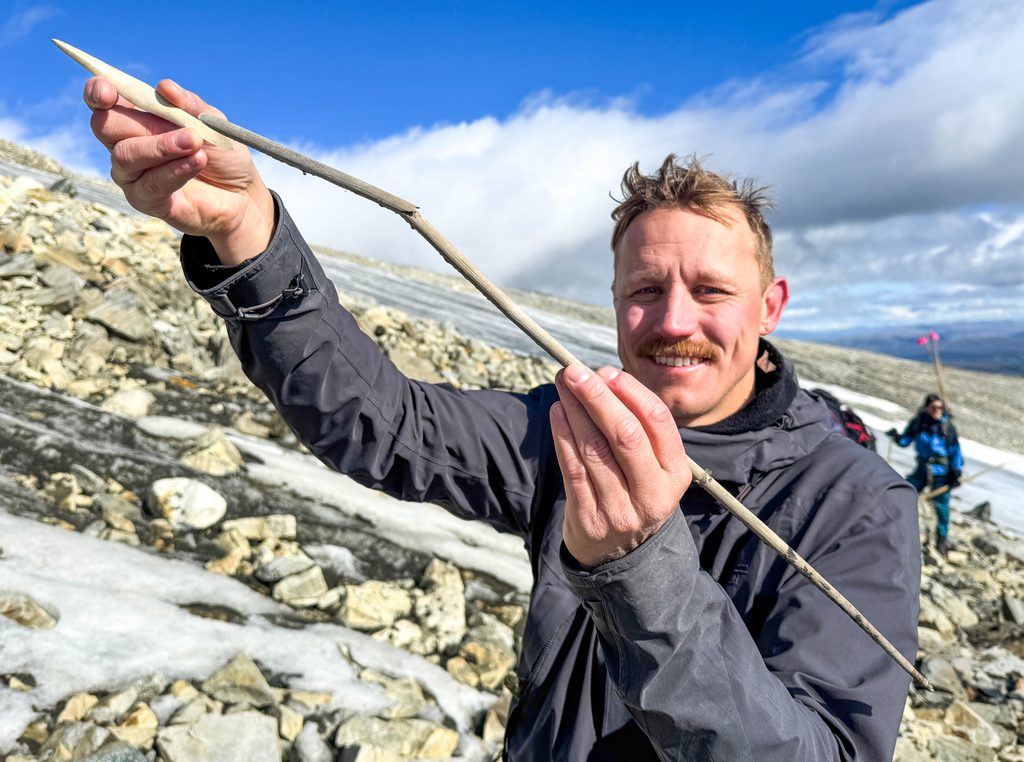
Among the oldest finds recovered this year is an arrow with a slate arrowhead and wooden shaft, approximately 5,000–6,000 years old.
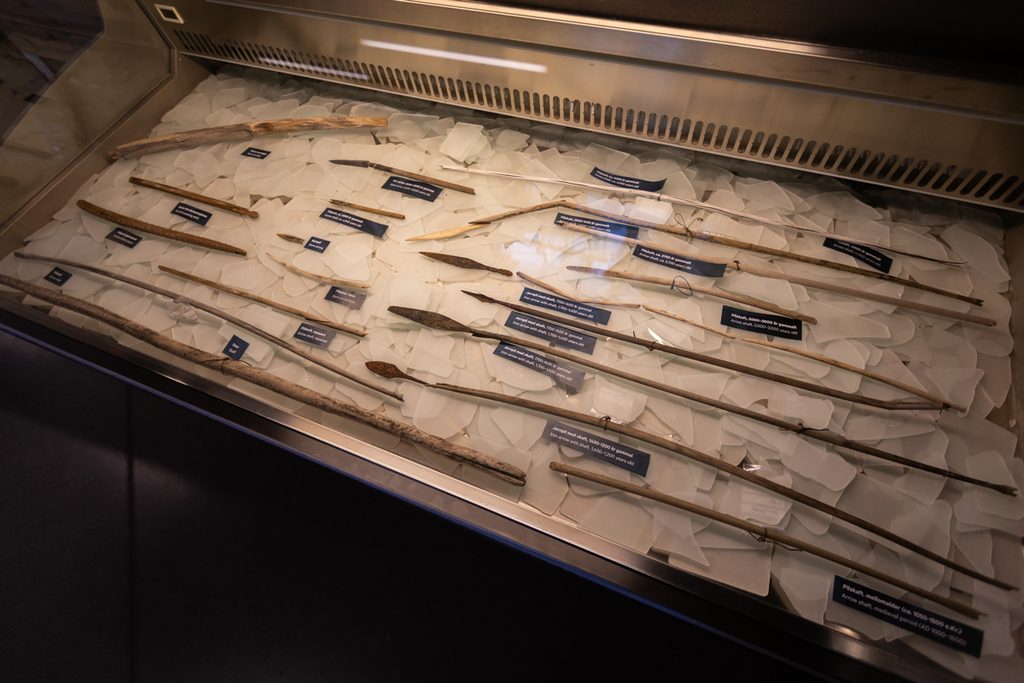
Several of this year’s remarkable finds are now being placed in a refrigerated display case – a “fresh finds counter” – at the Norwegian Mountain Centre in Lom. This means that some archaeological discoveries are being presented to the public only days after they were recovered from the ice.
Link to online folder with press release, contacts, pictures and videos: Pictures and videos 2026